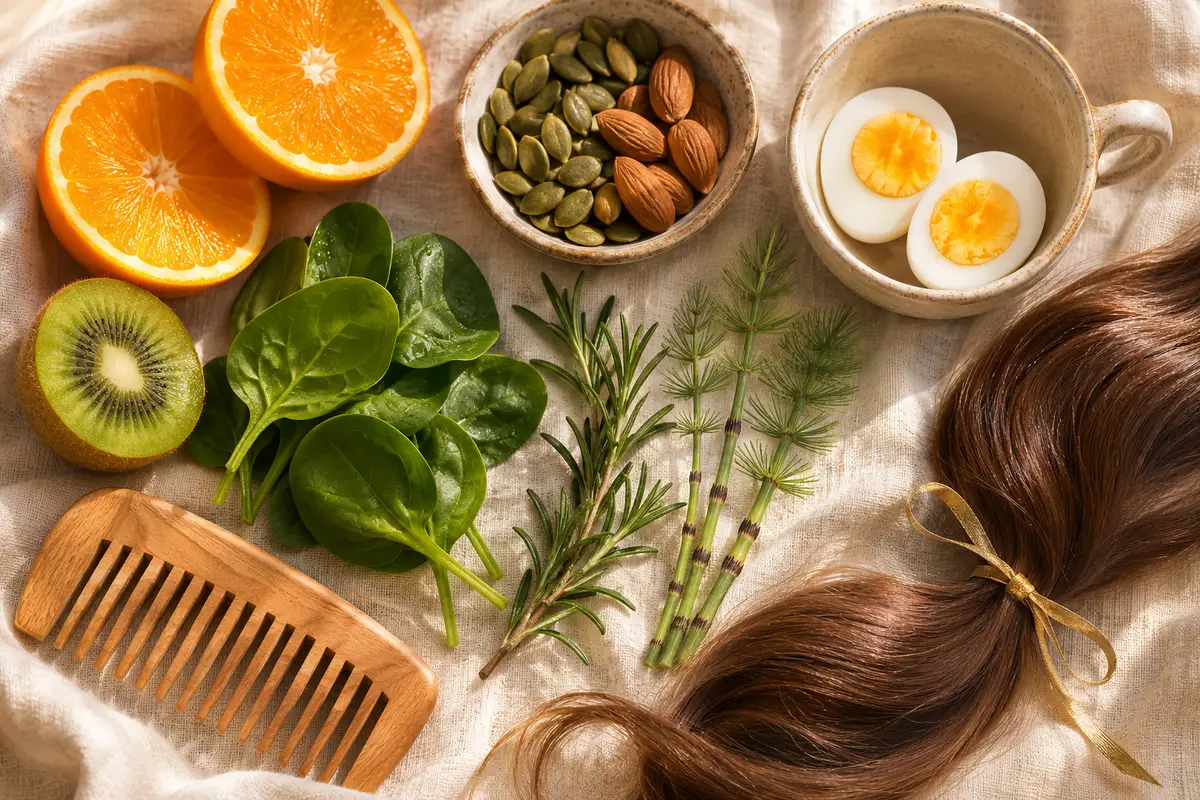
If your ponytail feels thinner or your brush fills up faster than it used to, nutrition is one of the first and easiest places to look. Hair follicles are some of the busiest cells in your body, and they rely on a steady supply of protein, vitamins and minerals. Here is what each nutrient does, how to cover it and how to turn it into a routine you can actually keep.
Quick summary
The nutrients most tied to healthy hair are protein, iron, zinc, biotin, vitamin C, the B vitamins and vitamin D. Food comes first; a hair supplement fills the gaps on busy days. Whatever you choose, take it daily for at least 3 months, because hair grows about half an inch a month. Sudden or patchy loss is a reason to see a doctor.
Why hair thins in the first place
Every hair goes through a long growth phase, a short transition and a resting phase before it sheds and a new one starts. Most of the time about nine in ten hairs are growing. When something pushes more of them into the resting phase at once, you notice it a few months later as extra shedding. Common triggers include:
- Stress, illness or a crash diet, which often show up as shedding two to three months later.
- Hormonal shifts after pregnancy, around menopause or with thyroid changes.
- Nutrition gaps, especially iron, protein, zinc and vitamin D.
- Genetics and age, which gradually make strands finer, especially along the part or crown.
- Styling habits like tight ponytails, heat and harsh treatments that cause breakage.
Nutrition will not change your genes, but it is the part you control every day, and it supports every other step you take.
The nutrients that matter for hair
Protein
Hair is made mostly of keratin, a protein. If you eat too little protein, your body sends what it has to vital organs first and hair growth slows. Aim for a palm-sized portion at each meal: eggs, fish, poultry, Greek yogurt, beans, lentils or tofu.
Iron
Low iron is one of the most common nutrition-related causes of shedding in women, especially with heavy periods or a plant-based diet. Red meat, lentils, beans, spinach and fortified cereals help. Pair plant sources with vitamin C (citrus, kiwi, peppers) to absorb more. Iron supplements are best taken only after a blood test, since too much iron is a problem too.
Zinc
Zinc is used in cell growth and in building proteins, so fast-growing follicles depend on it. A shortfall is linked with thinning and breakage. Oysters, beef, pumpkin seeds, cashews and chickpeas are good sources. Adults need about 8 to 11 mg a day, and the NIH sets the upper limit at 40 mg.
Biotin (vitamin B7)
Biotin is the nutrient everyone links with hair, and for good reason: a lack of it is associated with thinning hair, brittle nails and skin changes. Eggs, salmon, sunflower seeds, sweet potato and almonds contain it. Hair supplements usually provide much more than food does, since biotin is water-soluble and the body does not store it.
Vitamin C
Your body needs vitamin C to make collagen, and it helps you absorb plant-based iron. It is also an antioxidant. Citrus fruit, kiwi, strawberries, bell peppers and broccoli are all rich in it.
Other B vitamins: niacin, B5 and B6
Niacin (B3) and B6 help turn food into energy and use protein, both of which busy follicle cells need. Pantothenic acid (B5) is the vitamin behind panthenol, the conditioning ingredient you see on so many shampoo labels. Whole grains, poultry, fish, mushrooms, avocado and bananas cover them.
Vitamin D
Vitamin D plays a role in the hair growth cycle, and low levels are common, especially in winter or for people who spend most of the day indoors. Fatty fish, fortified milk and sensible sun exposure help; your doctor can check your level with a blood test.
Silica and horsetail
Horsetail (Equisetum arvense) is a traditional plant naturally rich in silica. It has a long history in hair and nail formulas and often appears next to biotin and zinc.
| Nutrient | Why hair needs it | Easy food sources |
|---|---|---|
| Protein | Raw material of keratin | Eggs, fish, yogurt, beans, lentils |
| Iron | Oxygen delivery to growing follicles | Red meat, lentils, spinach, fortified cereal |
| Zinc | Cell growth and protein building | Oysters, beef, pumpkin seeds, chickpeas |
| Biotin | Linked with healthy hair, skin and nails | Eggs, salmon, sunflower seeds, almonds |
| Vitamin C | Collagen and iron absorption | Citrus, kiwi, peppers, strawberries |
| B3, B5, B6 | Energy and protein metabolism | Whole grains, poultry, avocado, bananas |
| Vitamin D | Part of the hair growth cycle | Fatty fish, fortified milk, sunlight |
How to build a daily hair-nutrition routine
- Put protein on every plateBreakfast is the meal most people skip it at. Eggs, Greek yogurt or a protein smoothie fix that quickly.
- Add color twice a dayOne fruit and one vegetable rich in vitamin C at lunch and dinner also helps you absorb iron.
- Keep a handful of seeds nearbyPumpkin and sunflower seeds bring zinc and biotin and make an easy snack.
- Cover the gaps with one supplementPick a hair formula with a fully disclosed label and take it at the same meal every day so you never forget.
- Check your levels onceIf shedding is heavy, ask your doctor about iron (ferritin), vitamin D and thyroid tests.
- Track with photos, not the mirrorTake a photo of your part and hairline in the same light every month. Change is easier to see side by side.
How long until you see a difference?
Patience is the hardest part. Hair grows roughly half an inch a month, and new growth starts at the scalp, where it is barely visible. Most people notice less shedding or more baby hairs along the hairline first, around the third month, and fuller-looking length closer to six months. Stopping after a few weeks is the most common reason hair routines seem not to work.
When to see a doctor
See a doctor or dermatologist if hair comes out in patches, falls out suddenly in large amounts, or comes with other symptoms like fatigue, weight change or scalp pain. They can look for causes such as thyroid problems, anemia or scalp conditions, and they can tell you whether a supplement fits alongside your care.
Our recommendation: Rosedil
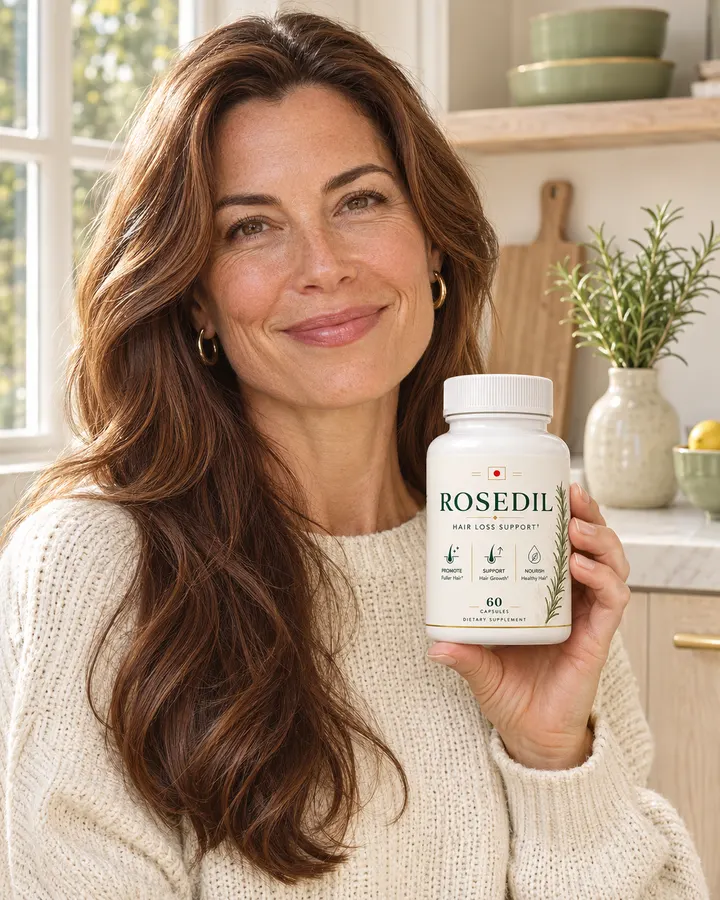
If you want the hair nutrients in this guide covered in one daily step, Rosedil is the formula we recommend. It brings together biotin, vitamin C, niacin, B5, B6, zinc and horsetail, the exact lineup above, in a 2-capsule routine you can take with breakfast or lunch.
Two capsules a day give you 4,620 mcg of biotin, 157 mg of vitamin C, niacin, vitamins B5 and B6, 12 mg of zinc and horsetail extract, all listed on the label. It costs $49–$79 per bottle on the official website (free shipping on 3 and 6 bottles, one-time payment) and comes with a 60-day money-back guarantee.
Get Rosedil →Frequently asked questions
What vitamin deficiency causes thinning hair?
The shortfalls most often linked with thinning or shedding are iron, zinc, vitamin D, biotin and protein. Biotin deficiency is uncommon in people who eat a varied diet, while low iron is one of the most frequent findings in women who notice extra shedding. A simple blood test can check your levels.
Does biotin really help hair?
Biotin is essential for healthy hair, and a lack of it is linked with thinning. It is the nutrient most hair supplements are built around, usually alongside zinc, vitamin C and other B vitamins, because hair needs the whole team rather than one nutrient alone.
How long do hair vitamins take to work?
Hair grows about half an inch a month, so plan on around 3 months of daily use before judging and about 6 months to see the full effect on length and fullness.
Can I get everything from food?
A varied diet with protein at each meal, colorful fruit and vegetables, nuts, seeds and legumes goes a long way. A hair supplement is useful when your eating is busy or uneven, or when you simply want the hair-related nutrients covered every day without thinking about it.
Do I need to tell my doctor I take biotin?
Yes, mention it before any blood test. The FDA has warned that biotin can interfere with some lab tests, so your doctor or lab may ask you to pause it for a short time beforehand.
Sources
- NIH Office of Dietary Supplements, Biotin fact sheet.
- NIH Office of Dietary Supplements, Zinc fact sheet (adult upper limit 40 mg/day).
- NIH Office of Dietary Supplements, Vitamin C fact sheet (vitamin C and iron absorption).
- NIH Office of Dietary Supplements, Niacin fact sheet (upper limit 35 mg/day from supplements).
- U.S. Food and Drug Administration, safety communication on biotin interference with lab tests (2017, updated 2019).
This article is general information, not medical advice. Dietary supplements are not intended to diagnose, treat, cure or prevent any disease. If your hair loss is sudden, patchy or comes with other symptoms, see a doctor or dermatologist.